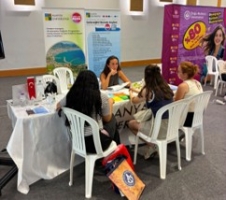
Alanya University participated in the University Promotion Days held at the Antalya Nazım Hikmet Fair and Congress Center as part of the Unilook Turkey fair, coming together with prospective students ...
Course Catalogue and ECTS
Alanya University’s ECTS Information Guide provides information on academic programmes, course content, learning outcomes, student workload, and assessment methods. It supports transparency and comparability in higher education in line with the Bologna Process and the Turkish Qualifications Framework for Higher Education.
The Guide explains programme structures and the relationship between learning outcomes, teaching activities, assessment, and ECTS credits. It also provides practical information about the University, student services, and life in Alanya.
ECTS Credits and Student Workload
The European Credit Transfer and Accumulation System (ECTS) assigns credits according to the learning outcomes and estimated workload required to complete a course. A full academic year normally corresponds to 60 ECTS credits.
Student workload includes lectures, practical activities, independent study, assignments, projects, and examinations. Academic departments determine and review course credits in relation to these activities and the intended learning outcomes.
Academic Recognition of Erasmus+ Mobility
Before mobility begins, the student, Alanya University, and the receiving institution agree on a Learning Agreement specifying the planned study activities and their recognition. The relevant Departmental Erasmus Coordinator guides the student in selecting courses appropriate to their programme.
Following study mobility, successfully completed activities covered by the approved Learning Agreement, including approved amendments, are recognised on the basis of the receiving institution’s Transcript of Records and the University’s applicable procedures.
For traineeship mobility, the Learning Agreement for Traineeships sets out the planned activities, learning outcomes, and recognition arrangements. Recognition is completed upon receipt of the required documentation confirming successful completion.
Course Selection for Incoming Exchange Students
Incoming exchange students should consult the departmental course catalogues and coordinate their proposed course selection with the relevant Departmental Erasmus Coordinator. Course availability, language of instruction, prerequisites, and semester of delivery should be confirmed before the Learning Agreement is finalised.
For an overview of the academic departments, please select the relevant department link. Detailed course information is available in the departmental course catalogues below.
For more detailed information on courses; https://sis.alanyauniversity.edu.tr/oibs/bologna/index.aspx
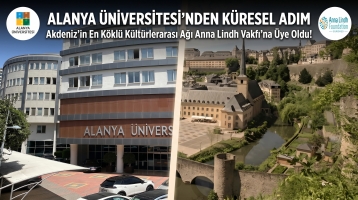
Continuously strengthening its global vision, Alanya University has officially become a member of the Anna Lindh Foundation (ALF), the largest intercultural dialogue organization bringing together the...
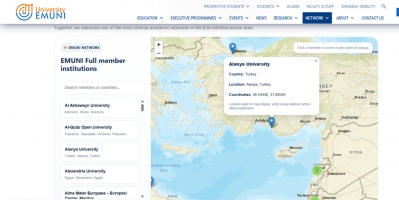
Steadfast in its commitment to enhancing its strength and visibility in the international arena, Alanya University has become a member of the Euro-Mediterranean University (EMUNI) Network, one of the ...
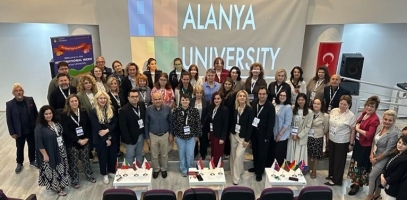
Alanya University opened its doors to the world as part of the 7th International Week, organized with the theme “Voices of Erasmus+: Sharing Our Stories.”
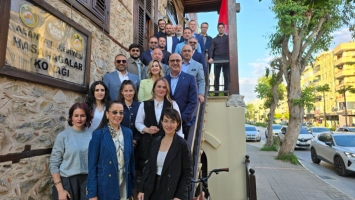
The Alanya Tourism Promotion Foundation (ALTAV), one of the strongest representatives of Alanya tourism in the international arena, held the first meeting of its new board of directors at Hasan Ağalar...
There are no event available.
See All